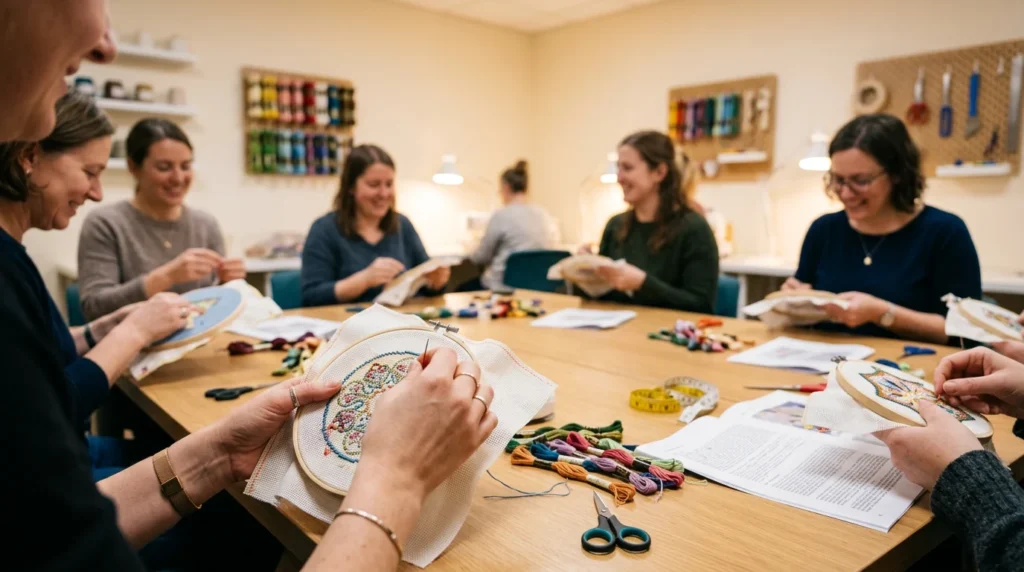
Quick answer: An open needlepoint stitch night is a casual meet-up where you bring a needlepoint project and stitch alongside others. You can usually expect shared table space, conversation, and informal help with stitches, threads, tension, and planning next steps when you get stuck. It’s generally not a formal class, so you work on your own project at your own pace while picking up tips from the group.
What You’ll Do During the Night
You’ll settle in with your canvas, threads, scissors, and any chart or notes you’re following, then stitch at your own pace. People typically work on different projects at the same time—belts, ornaments, pillows, or framed pieces—so you get exposed to lots of approaches without the pressure of “keeping up.” If you’re curious about a new stitch or thread, stitch nights are a low-stakes place to ask and compare results in real time.
Most groups keep the vibe social and practical: stitch for a while, chat, and pause to look at someone’s progress or problem area. If you’ve been searching for an open needlepoint stitch night, expect the main benefit to be momentum—having a set time on the calendar makes it easier to actually pick up your project and move it forward.
If you run into a snag, people often help you diagnose it on the spot: why a stitch is leaning, why coverage looks thin, or why a decorative pattern isn’t landing evenly on the canvas. Even a quick “try a smaller needle” or “railroad your threads” can save you hours of unpicking later.
What to Bring (and What You Can Usually Borrow)
Bring the project you want to work on, plus the basics: tapestry needles in the right size, your threads, small sharp scissors, and a laying tool if you use one. A project bag that keeps fibers clean and untangled makes the night smoother, especially if you’re juggling multiple colors. If your eyes appreciate it, add a light or magnifier.
If you’re new, don’t let “gear anxiety” stop you. Many stitch nights are friendly to beginners and someone can often help you match needle size to canvas mesh, choose a starter stitch that won’t distort the canvas, or show you how to start and end threads neatly. If your project uses specialty fibers, bring the label or note the fiber name so others can suggest the right tension and stitch choice.
Typical at Many Stitch Nights vs. Confirm with the Host
Typical at many stitch nights: open work time (not a structured lesson), shared table space, and a social atmosphere where people will often share tips if you ask. Many hosts welcome a range of skill levels, from brand-new stitchers to experienced ones working on complex decorative stitches.
Confirm with the host: details vary by shop and group, so it’s smart to verify the logistics before you show up. Use this checklist to confirm:
Start/end time • Fee (if any) • RSVP required or drop-in • Space limits or seating availability • Whether staff will troubleshoot or it’s purely peer-to-peer • Whether you can borrow tools (scissors, laying tool, frame weights, extra needles) • Beginner friendliness and what a first-timer should bring
Before You Go and When You Arrive
Before you go: pick one project to focus on, pre-cut a few manageable thread lengths, and pack the tools you reliably use. If you want help, mark the exact spot you’re stuck (a loose corner, a confusing stitch diagram, a color choice you’re second-guessing) so you can show it quickly. If your canvas is getting wavy, consider bringing whatever you use to keep tension steady (stretcher bars, frame, or scroll rods).
When you arrive: aim to get there about 5–10 minutes early so you can claim a seat, set up comfortably, and avoid rushing your first stitches. Introduce your project (“I’m working on this background and it’s pulling—can you look?”), stitch for a bit, then ask specific questions when you hit a decision point. Near the end, leave a couple minutes to pack up: cap your needle, wind or bag loose fibers, and jot a quick note about what to do next so you can restart easily at home.
How to Know If It’s a Good Fit for You
An open stitch night is a good fit if you like learning informally, enjoy a bit of community, or need a nudge to stay consistent. It’s also helpful if you’re returning to needlepoint after a long break and want someone to sanity-check your materials and technique before you invest more time.
If you want step-by-step instruction from the ground up, a structured class may be better. Open nights shine for in-progress projects, quick feedback, and the “show me how you did that stitch” moments that are hard to get from a book alone.
Check Blue Willow Needlepoint’s event details or contact the shop to confirm what’s provided and whether you need to RSVP.