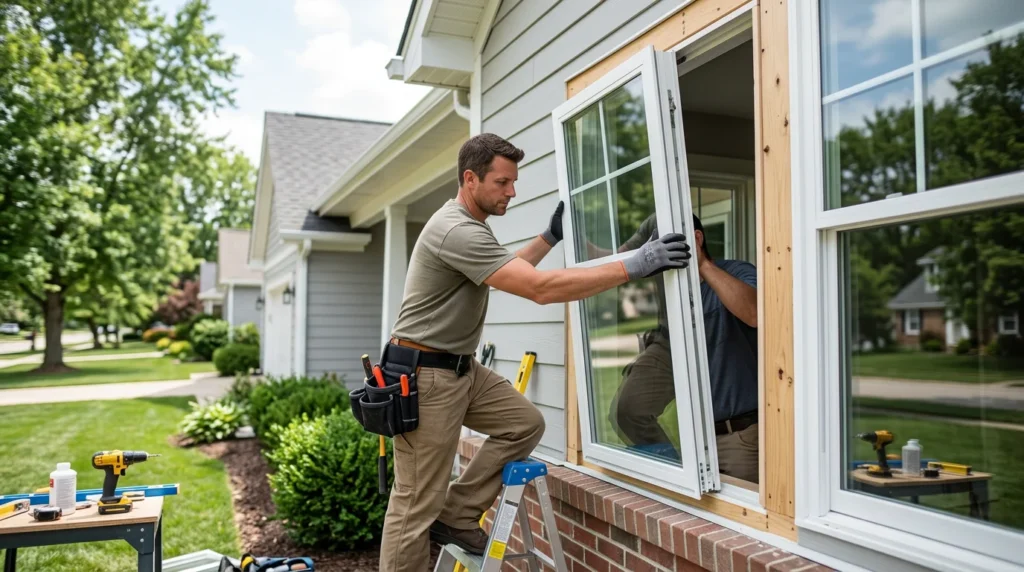
Quick answer: Choose a window replacement company by confirming they measure each opening, explain the full installation method (not just the window brand), and put warranty terms in writing for both product and labor. Ask what problems they see in your current windows and how they’ll address flashing, water management, and trim work. Compare apples-to-apples quotes that list window specs, glass options, and scope.
What to Ask Before You Sign
Start by asking how the company will inspect and measure your existing openings. A reliable crew should look for rot, water staining, soft sills, out-of-square frames, and evidence of past leaks before recommending a window type. You want a plan for how those issues get fixed, not covered up.
Ask what installation method they use for your house: insert (pocket) replacement, full-frame replacement, or new-construction style with a nailing fin. Each has a place. Insert replacements can be less disruptive when the existing frame is sound; full-frame is often the better call if you have rot, persistent drafts around the frame, or you want to change the window size. A local window replacement company should be able to explain why one approach fits your situation and what interior and exterior trim work is included.
Get the scope in writing: disposal of old windows, protection of floors and landscaping, lead-safe practices if your home is older, and who handles paint or stain touch-ups. Clear scope prevents surprise charges and finger-pointing later.
A Quick “Near Me” Vetting Checklist
Use this quick checklist to screen companies before you spend time on multiple in-home appointments:
- Licensing: verify state/local licensing requirements for your area and confirm the contractor meets them (if applicable).
- Insurance: ask for proof of general liability and workers’ compensation coverage.
- Written labor warranty: get the labor warranty terms in writing, separate from the manufacturer’s product warranty.
- Who does the work: confirm whether installers are employees or subcontractors, and who supervises the job site.
- Service calls: ask how warranty/service requests are handled, typical response steps, and who you contact if a window sticks or leaks.
If a company won’t answer these plainly, that’s usually a sign the paperwork and follow-through may be just as unclear.
Red Flags That Lead to Regret
Be cautious if the conversation stays focused on “the best window” without specifics about water management. A quality install depends on correct flashing, sealing, and shimming so the window operates smoothly and drains properly. If they can’t describe how they handle the sill area and the head flashing, keep shopping.
Watch for quotes that are vague (“replace windows as needed”) or that don’t list the window series, glass package, and hardware. Also be wary of high-pressure “today only” discounts or anyone unwilling to show sample warranty language. A solid contractor is comfortable letting you compare details.
Another common regret is choosing a company that subcontracts without clarity. Subcontracting isn’t automatically bad, but you should know who is on site, who supervises, and who you call if a sash sticks or a leak shows up later.
How to Compare Quotes Like a Pro
Line up quotes and check that they match on window type (double-hung, casement, slider), frame material, and glass. Low-E coatings, gas fills, and laminated glass can change comfort and noise noticeably, but only if you’re comparing the same options. Ask for the U-factor and SHGC values shown on the NFRC label for the exact configuration being installed.
Use a simple “quote comparison table” list so you’re not guessing what’s included:
- Window line/series (exact model)
- Glass package (Low-E type, gas fill, laminated/tempered where needed)
- Install method (insert vs full-frame vs nailing-fin/new-construction style)
- Trim scope (interior stops, exterior capping/brickmold, caulk/paint-ready finish)
- Disposal (old windows and debris haul-away)
- Lead-safe practices (if your home may have lead paint)
- Payment schedule (deposit, progress payments if any, final payment conditions)
Confirm what “finish work” means. Some bids include new exterior trim or capping; others reuse existing trim and seal the gaps. Inside, find out whether they replace stops, repair drywall, or leave you with paint-ready gaps. If you’re sensitive to drafts, ask how they air-seal the gap between the window and framing (foam type and backer rod/caulk details).
What a Good Outcome Looks Like
After replacement, windows should open and lock easily, sit square in the frame, and show even reveals (the visible gaps around the sash). You should not feel air movement at the edges on a windy day, and you shouldn’t see water staining or bubbling paint around the trim after the first heavy rain.
Before the crew leaves, do a simple walkthrough: operate every sash, check screens, confirm exterior caulk lines look continuous, and verify any alarms or sensors are reinstalled if applicable. Keep your paperwork: model numbers, warranty terms, and care instructions for tracks and weep holes.
To request an in-home measurement and a written scope, contact Georgia Home Windows.