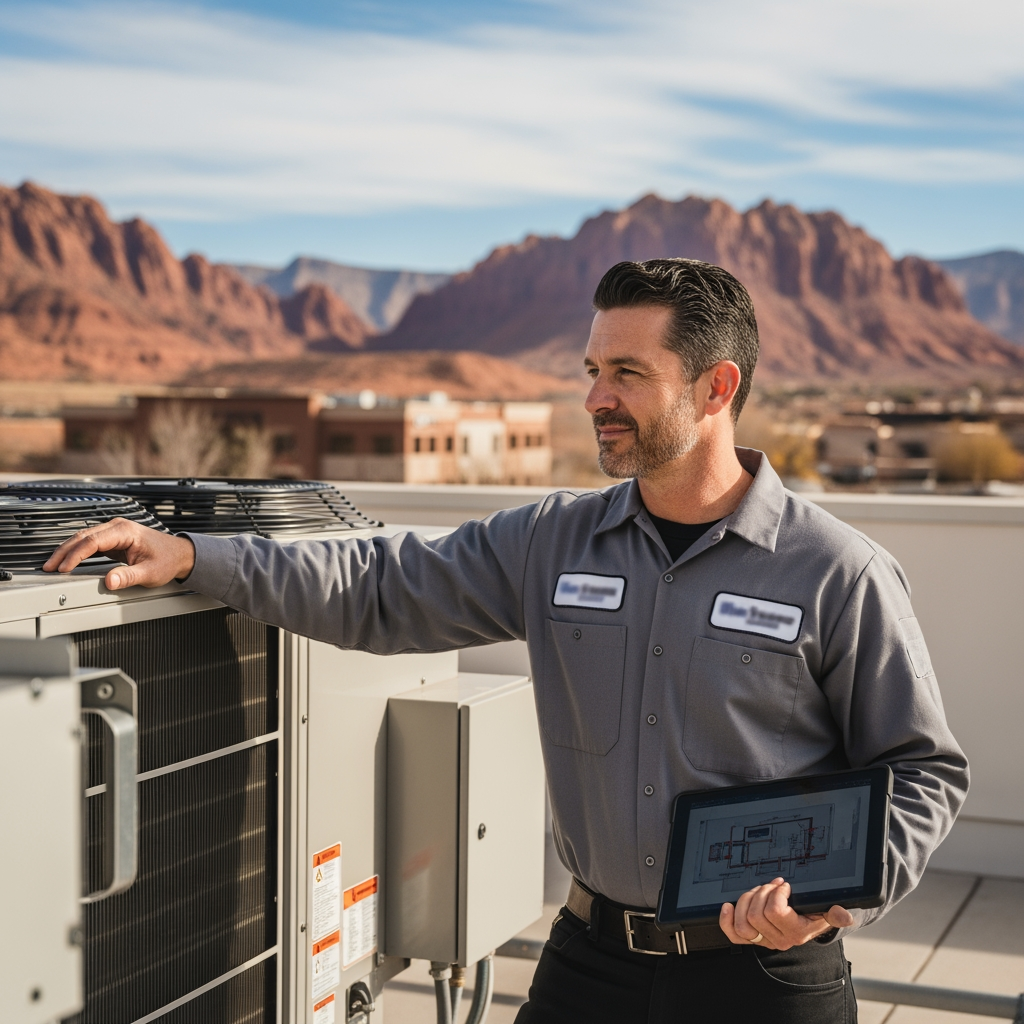
When you need reliable commercial ac in St. George, UT, it pays to understand the local climate, common system issues, and the upgrades that will save money over time. I’ll walk you through the essentials, and I’ll also point to trusted guidance on energy efficiency so you can make decisions that protect comfort and the bottom line (U.S. Department of Energy).
Why commercial AC matters more here than most places
St. George’s desert climate means long, hot summers and rapid temperature swings between day and night. Commercial buildings—from restaurants and retail centers to warehouses and medical offices—face intense cooling loads. That’s why the right commercial AC strategy does more than lower temperatures: it protects inventory, keeps customers and staff comfortable, and reduces costly downtime from system failures.
How commercial air conditioning systems differ from residential units
Commercial systems are built for scale and continuous use. They often include rooftop units (RTUs), packaged systems, split systems with larger compressors, and ducted rooftop or chilled-water setups. These systems rely on different components—industrial-grade compressors, larger condensers, multiple staged fans, and sometimes building automation systems—to control performance across several zones. Because of that complexity, maintenance and repair require experienced technicians who understand commercial controls, ventilation standards, and local code requirements.
Common problems I see in St. George commercial systems
Working with owners in neighborhoods like Bloomington, SunRiver, and Sand Hollow, I’ve noticed recurring issues that increase operating costs and reduce comfort. Identifying these early cuts repair bills and extends equipment life:
- Dirty coils and restricted airflow from dusty outside conditions and planters near rooftop units.
- Refrigerant leaks and low charge, which reduce cooling capacity and drive up energy use.
- Worn contactors, motors, and belts from heavy run-hours during summer months.
- Poorly calibrated thermostats and control sequences that lead to short cycling or simultaneous heating/cooling.
Simple maintenance steps that prevent big problems
Routine maintenance is the best investment for commercial AC. I recommend following a seasonal plan so systems enter peak-use periods in top shape. Focus on filtration, airflow, and electrical health during inspections. A disciplined approach avoids emergency calls and keeps customer-facing spaces comfortable year-round.
- Replace or clean filters monthly during heavy use and inspect ductwork quarterly for leaks and dust.
- Clean condenser and evaporator coils annually, or more often if rooftop dirt and pollen are heavy.
- Test electrical components and safety controls every service visit to prevent surprises.
- Check refrigerant pressure and look for oil or stains that indicate a leak.
Upgrades and trends worth watching
Several trends are reshaping commercial cooling and are particularly relevant to businesses in this area. Two major ones are electrification and smarter controls. Electrification, including greater adoption of high-efficiency heat pumps, is driven by lower operating costs and incentive programs in many states. Building-level controls and smart thermostats save energy by tracking occupancy, schedules, and setpoints. Demand-response programs and grid-aware systems can reduce bills by shifting loads during peak pricing.
Another trend is improving indoor air quality (IAQ). With more attention on air cleanliness, businesses are adding filtration upgrades, UV lights for coil disinfection, and controlled ventilation to balance energy use with health goals. These upgrades are especially helpful in healthcare settings, kitchens, and retail environments where both comfort and hygiene matter.
Energy incentives and local considerations
There are sometimes local and federal incentives that offset retrofit costs for high-efficiency equipment. While incentives change over time, the U.S. Department of Energy provides guidance on energy-saving technologies and available programs. If you’re planning a major upgrade—like replacing rooftop units or switching to variable refrigerant flow (VRF)—check local utility programs and potential tax credits before you commit.
How to size a commercial AC system for your building
Proper sizing balances cooling capacity with efficiency and comfort. Oversized equipment short-cycles and wears out faster; undersized equipment runs continuously and can’t keep spaces comfortable. A proper load calculation considers roof orientation, insulation levels, glazing and window shading, occupancy patterns, internal heat from equipment, and local climate data. For many small-to-medium buildings here, upgrading insulation and addressing solar gain on western facades yields immediate benefits and can allow for smaller, more efficient equipment.
Choosing the right contractor in St. George
Hiring a contractor familiar with local codes, roof-mounted units, and the desert environment matters. When I evaluate a contractor, I look for proven commercial experience, clear service agreements, prompt emergency support, and modern diagnostic tools. You’ll also want someone who documents work, offers seasonal maintenance plans, and provides transparent cost breakdowns for labor, materials, and parts.
What to check before you sign
- Confirm they hold commercial HVAC licenses and insurance for your area and project type.
- Ask for references from similar local jobs and proof of commercial warranty practices.
- Review the service agreement: response times, preventive maintenance frequency, and invoicing terms.
- Request an energy audit or baseline performance report for older systems so you can compare potential upgrades.
Repair vs. replace decisions
Deciding whether to repair or replace a commercial AC system depends on age, repair frequency, efficiency, and operational risk. As a rule of thumb, if a rooftop unit is more than 10–15 years old and has had multiple major repairs, replacement often leads to better reliability and energy savings. If a single component failed on a newer system, a repair may be the right call. Consider lifecycle cost—not just the upfront price—when you evaluate options.
Real-world steps to improve efficiency right now
Here are practical steps you can implement quickly to reduce energy consumption without a major capital expense. Many of these actions improve comfort while lowering utility bills and the likelihood of emergency failures.
- Set consistent temperature schedules and avoid “vacation mode” extremes that force systems to work harder when they restart.
- Install programmable or smart thermostats and integrate them with building schedules.
- Schedule spring and fall maintenance to catch issues before peak cooling season.
- Improve shading for west-facing windows and add reflective roof coatings to lower rooftop heat gain.
Addressing emergency failures and minimizing downtime
When an AC fails in the middle of July, quick triage matters. A clear emergency plan includes a preferred contractor, a list of critical zones and sensitive equipment, and temporary mitigation steps like portable cooling or staged shutdowns to protect inventory. Keep spare parts on hand for older, mission-critical units if replacement lead times are long. Preventive service contracts often include faster response times and prioritized scheduling during peak weeks.
Frequently asked questions
How often should commercial AC be serviced?
For most businesses in St. George, a professional inspection and tune-up twice a year—once before cooling season and once after—offers reliable protection. High-use environments or systems running 24/7 may need quarterly checks.
Can I control energy costs without replacing equipment?
Yes. Operational changes, improved control logic, better maintenance, and simple envelope improvements like shading and insulation can yield significant savings. Smart controls and demand-response participation can also lower peak charges.
What are the signs my system needs major work?
Look for steadily rising energy bills, frequent component failures, uneven temperatures across zones, and systems that run continuously without reaching setpoints. Those signs suggest the system is losing capacity or efficiency and needs a thorough evaluation.
Local considerations for St. George business owners
St. George’s dry air and frequent dust can accelerate coil fouling and filter loading. Rooftop units exposed to desert sun benefit from routine coil cleaning and checking roof curbs and flashing for leaks. In older commercial buildings, verifying insulation levels and duct sealing will often pay back quickly because long duct runs and attic spaces can add significant thermal load.
Wrapping up and next steps
Keeping commercial AC systems healthy in St. George means planning, preventive maintenance, and smart upgrades. Start with a seasonal checklist, invest in good controls, and choose contractors who understand commercial systems and this climate. Those steps will reduce emergency repairs, extend equipment life, and keep your customers and staff comfortable no matter how hot it gets.
When you’re ready to take the next step—whether that’s a maintenance plan, an efficiency audit, or a full system upgrade—reach out to Nextech North America for commercial HVAC and refrigeration solutions in St. George, UT.