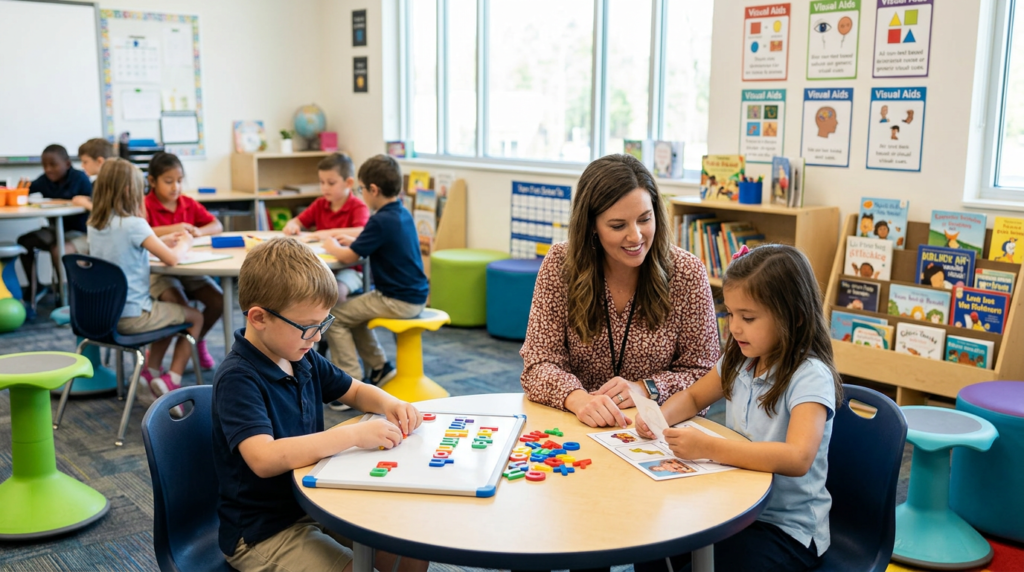
Quick answer: Look for a school that uses structured literacy (explicit, systematic phonics) delivered in small groups or 1:1, with frequent progress monitoring and instruction in spelling, writing, and reading fluency—not just accommodations. Ask how they screen for co-occurring needs like ADHD or dysgraphia, how they build confidence, and how they communicate goals, data, and next steps with families.
Instruction That Matches How Dyslexic Brains Learn
A strong dyslexia program teaches reading in a direct, step-by-step way: sounds to letters, letters to words, and words to connected text. You want explicit instruction in phonemic awareness, decoding, spelling, and fluency, with lots of guided practice and immediate feedback. That approach is often called structured literacy, and it’s the backbone of what many families search for in a dyslexia school in Gwinnett County because it targets the root reading skill gaps instead of asking a child to “read more” and hope it clicks.
Ask how lessons are organized (scope and sequence), how new skills are taught and reviewed, and what happens when a student gets stuck. A clear plan matters: dyslexic students usually need more repetition, more multi-sensory practice (seeing, saying, writing), and more explicit teaching of spelling patterns than they’ll get in a general classroom.
Progress Monitoring And What Common Assessments Reveal
You should expect regular check-ins that show growth in specific skills: phonics patterns mastered, decoding accuracy, reading rate, spelling patterns, and writing mechanics. Ask what assessments they use, how often they measure progress (often every few weeks to a couple months), and how they adjust instruction based on results.
If a school names tools, listen for what each one measures. For example, DIBELS can flag risk and track basic reading skills like oral reading fluency and accuracy over time; the CORE Phonics Survey can pinpoint which phonics patterns are secure versus shaky; the CTOPP-2 is often used to look at phonological processing like phonemic awareness and rapid naming; the GORT can provide a structured look at fluency and comprehension; and spelling inventories (such as the Words Their Way inventory) can show which spelling features a student is using or missing. These are examples, not requirements, but the school should be able to explain what they measure and how results change instruction.
Look for communication that’s concrete. You want to hear, “Here’s the skill we’re working on, here’s what your child can do now, and here’s the next instructional target,” not vague reassurance.
Tour Checklist Parents Can Use Right Away
Bring these questions on a tour and ask for plain-language answers:
- What is the maximum group size for reading instruction, and how often is 1:1 support used?
- How many minutes per day are dedicated to structured literacy instruction?
- Can you show a sample scope and sequence (the order skills are taught and reviewed)?
- How often do you progress-monitor, and what does a sample progress report look like?
- How do you teach spelling and written expression alongside reading?
- What happens if a student plateaus—what changes first (grouping, lesson pacing, program components)?
- How do you support co-occurring needs like ADHD, dysgraphia, or language weaknesses during instruction?
Gwinnett-Specific Logistics And School Coordination
In Gwinnett County, the best program on paper still has to work with real life. Ask about start/end times, carpool length, and how the schedule fits therapy appointments and siblings’ schools. A long commute can quietly drain a child’s stamina, especially if reading instruction is early in the day and the ride is stressful.
If your child is coming from a public school with an IEP or 504 plan, ask how the school coordinates records and accommodations. Many families keep copies of the most recent eligibility paperwork, evaluations, and progress notes so everyone stays aligned on goals and supports (like audiobooks, reduced copying, or extended time). Tour schools and ask the questions above; request to see a sample progress report. If you want to compare options locally, Sage School is one of the schools families may consider in the area.